When your refrigerator stops cooling, the clock on your groceries starts ticking. Before you panic (or before you call us), here are the seven most common reasons a fridge stops cooling — in roughly the order our technicians check them in real Memphis homes.
The number-one cause of a “dead” fridge is a tripped GFCI outlet, a kicked plug, or a flipped breaker. Pull the fridge out carefully, confirm it’s plugged in firmly, and test the outlet with something else. If the outlet is dead, reset the GFCI or check the breaker.
Kids open the fridge a hundred times a day, and the dial gets bumped. Verify the fridge is set to about 37°F and the freezer to about 0°F.
Modern fridges cool the fresh-food compartment using cold air pulled from the freezer. If a bag of frozen peas is leaning against the freezer vent, that airflow stops. Pull items away from the back walls.
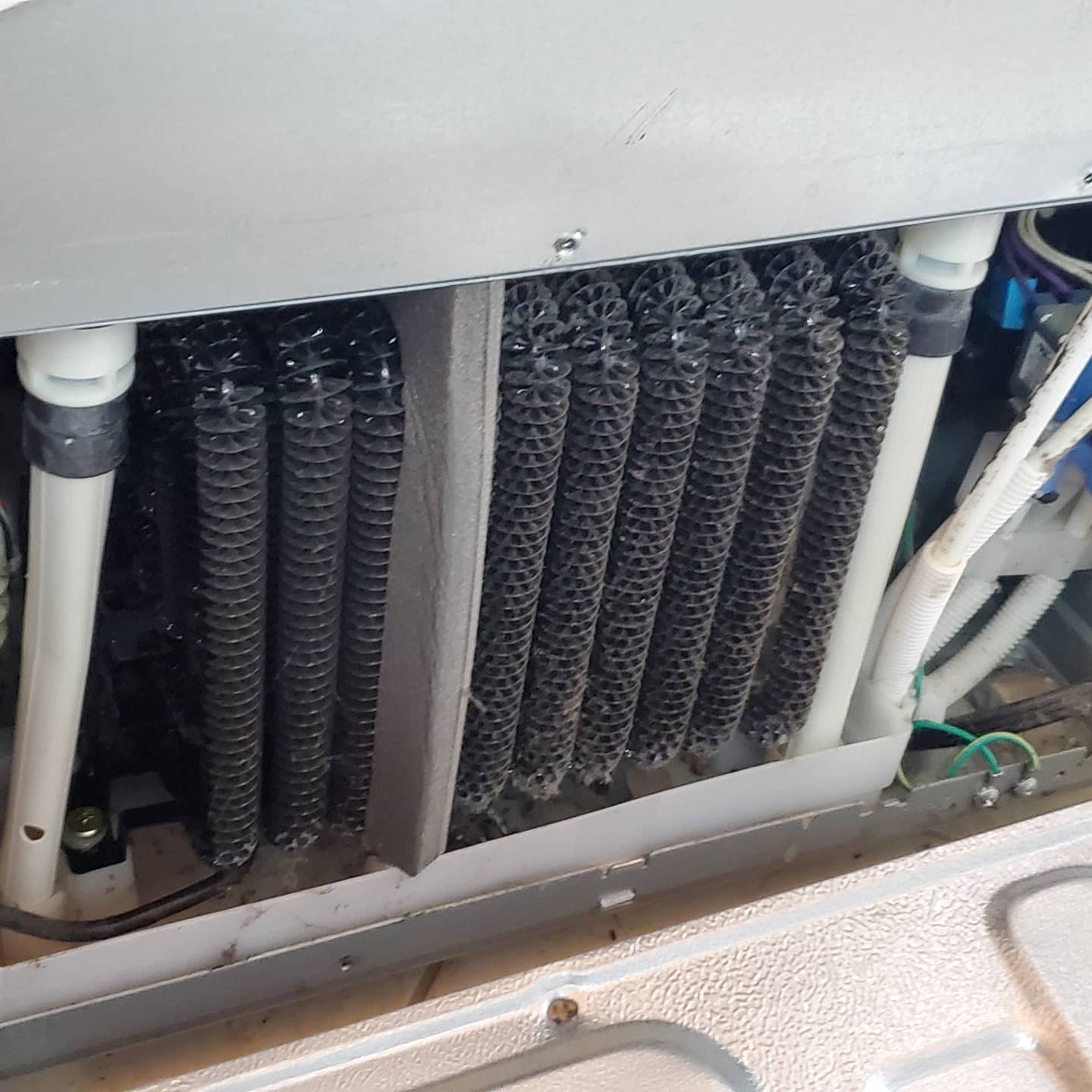
The coils on the back or underneath release heat. Coated in dust, they can’t. Unplug, vacuum the coils with a brush attachment, and give the fridge an hour to recover.
Slide a dollar bill between the door and frame and close the door. If it pulls out with no resistance, the gasket is shot and should be replaced.
If the freezer is frosty and the fridge is warm, the evaporator fan is likely stalled or blocked by frost — usually a failed defrost system. That’s a service call.
No humming, or loud clicking every few minutes, points to a failed compressor or relay. Don’t pour money into an old fridge here — call for a diagnosis.
Our techs in Memphis can usually tell from your description whether it’s a quick fix or a real repair. Either way, you’ll get a straight answer.